描述:
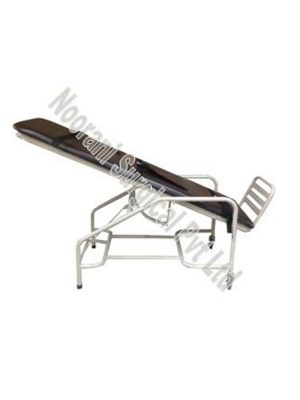
- 婴儿床
- Structure Made of MS Pipe
- Powder Coated Paint
- Cot can be Tilted
- 配有雷金覆盖床垫。


他称“婴儿婴儿床”被用来描述板条,高领的孩子的床。[1]它来自古老的英语单词“克里布“ 意思是 ”马槽”(食物槽,指的是巴西内特) 或者摊位(意味着要融合孩子)。
直到19世纪,婴儿床从巴西内特s,掌握将孩子放在床上的角色。婴儿床和贝西尼特之间的区别发展是很自然的,因为“认为孩子的床可以从地面上抬高至关重要”。[1]这是由于对低于膝盖的有害烟雾的感知以及天花板附近的爆炸性蒸气,两者之间的空气良好。[1]Once children’s beds were raised off the ground the role of the sides changed from a convenience to a safety feature.
人们认识到一旦孩子学会站立they may be able to get out of a bed with low sides. According to an expert of the time, infant beds were used once the child was 12 months old. Often one side was hinged to open the enclosure, a function fulfilled in modern infant beds with a dropside. With the hinge side lowered, the bed could be moved on casters, and they could be moved right up to the carer’s bed when needed.[1]
Iron beds were developed in 17th century Italy to address concerns about臭虫侵扰andmoths。[2]这个新应用程序很快扩展到儿童床 - 可岩的铁巴西内特(和spear- 类似角柱)的历史可追溯至1620-1640。[2]支持者促进了铁床的假定健康益处。在19世纪后半叶,由金属制造的婴儿床变得流行。[1]Infant beds (and bassinettes) constructed from iron with mesh or chain sides were common. Childcare experts gave iron beds their approval because it was hygienic material (compared with wood) and could not “habour vermin”,[1]其中臭虫侵扰,,,,虱子和飞蛾引用了担忧。[2]Commonly painted with a white玻璃搪瓷,后来与木材一起工作的制造商继续用现在的传统白色绘画。不幸的是这经常lead paint,,,,and children were notorious for chewing and sucking the sweet surface.
自1938年以来,婴儿芬兰睡了纸板箱with a mattress in the bottom, which are distributed to expectant mothers as a “产妇包” containing baby supplies.




评论
There are no reviews yet.