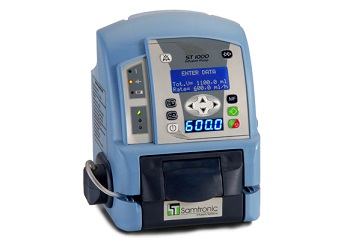
Aninfusion pumpinfuses流体,药物或者营养进入patient’s循环系统. It is generally used静脉注射, 虽然皮下,arterial和epiduralinfusions are occasionally used.
Infusion pump can administer fluids in ways that would be impractically expensive or unreliable if performed manually by nursing staff. For example, they can administer as little as 0.1 mL per hour injections (too small for a drip), injections every minute, injections with repeated大力由患者要求,每小时最多最多patient-controlled analgesia), or fluids whose volumes vary by the time of day.
因为它们也可以产生很高但受到控制压力,他们n inject controlled amounts of fluids subcutaneously (beneath the skin), or epidurally (just within the surface of the中枢神经系统- 一个非常流行的本地脊柱anesthesiafor分娩)。
Theuser interfaceof pumps usually requests details on the type of infusion from the technician or nurse that sets them up:
- Continuous infusion通常由小的输注脉冲组成,通常在500纳米木材和10毫升之间,具体取决于泵的设计,这些脉冲的速率取决于编程的输注速度。
- 间歇性输注has a “high” infusion rate, alternating with a low programmable infusion rate to keep the套管打开。时间是可编程的。此模式通常用于管理抗生素, or other drugs that can irritate a blood vessel.
为了将全部抗生素剂量输入患者,必须比药袋中的“要注入要注入的体积”或VTBI至少30 ccs的编程……否则,最多一半的抗生素将留在IV中管道。
- 患者控制is infusion on-demand, usually with a preprogrammed ceiling to avoid intoxication. The rate is controlled by a pressure pad or button that can be activated by the patient. It is the method of choice forpatient-controlled analgesia(PCA), in which repeated small doses of阿片类药物analgesicsare delivered, with the device coded to stop administration before a dose that may cause hazardous respiratory depression is reached.
- 总肠胃外营养usually requires an infusion curve similar to normal mealtimes.
一些泵提供的模式可以根据一天中的时间来缩放或控制金额。这允许circadian cycles某些类型的药物可能需要




评论
尚无评论。